

The Skills Beauty School Doesn’t Fully Prepare You For
Beauty school is an important beginning.
It gives you the foundation to enter the industry, earn your license, and start learning the craft.
But most stylists quickly discover that the real world behind the chair requires more than what can be covered in school.
That does not mean beauty school failed you.
It means the industry keeps teaching you after graduation.
The salon floor is different from the classroom.
In school, there is usually more time, more supervision, and more room to pause.
Behind the chair, things move differently.
Clients have expectations.
Schedules have pressure.
Hair behaves differently from one person to the next.
Questions come up in real time.
You have to make decisions while managing both the service and the client experience.
That transition can feel overwhelming, especially for newer stylists.
A lot of beauty pros enter the industry with talent but still feel underprepared for the professional judgment required in daily salon life.
Technical skill keeps developing after school.
There are some things you only begin to understand through repetition, mentorship, and real-world practice.
How to adjust when the hair does not respond the way you expected.
How to manage heat, texture, timing, and finish.
How to create results that last beyond the appointment.
How to work with different hair needs without guessing.
How to keep refining your technique instead of relying only on habit.
This is especially true with skills that require control, patience, and a strong foundation.
Old-school techniques, advanced finishing, silk press consistency, Marcel work, and service longevity are not just “extra” skills. They can shape the way a stylist thinks, works, and solves problems.
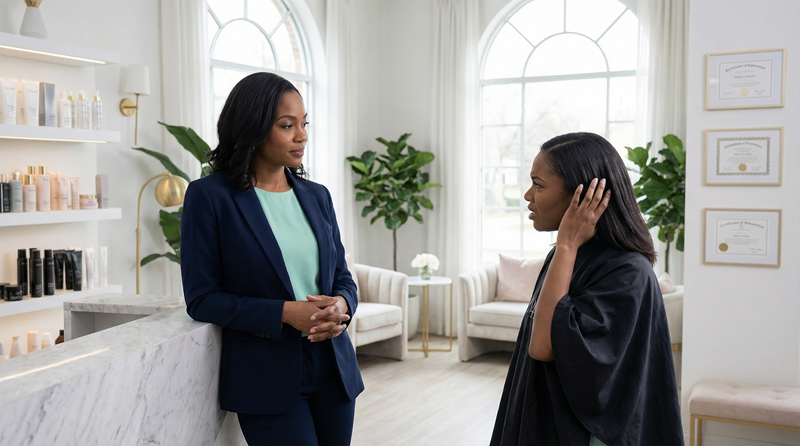
Communication is part of professionalism.
One of the biggest surprises for many newer stylists is how much communication matters.
You are not only doing hair.
You are managing expectations, explaining options, reading client concerns, setting boundaries, and helping people make decisions.
That takes practice.
A strong stylist learns how to speak with clarity and confidence. Not with pressure. Not with ego. With professionalism.
Clients need to feel guided, not confused.
They need to understand what is possible, what is not recommended, and how to care for their results after they leave.
You were not meant to figure everything out alone.
Many stylists put pressure on themselves to already know everything once they are licensed.
But professional growth does not work that way.
You continue learning.
You ask questions.
You watch others.
You practice.
You receive feedback.
You build confidence over time.
That is why mentorship and community matter.
A beauty professional needs places where they can keep growing without shame, ask better questions, and strengthen the skills that support long-term success.
Beauty school may start the journey.
But continued education, real-world support, and professional development help you build the career.